|
The quite young practice of growing grapes in Bali
has started at the beginning of the 20th Century but
it is only a few decades ago, after multiple trials
and errors, survival to parasites and other vine diseases,
that the grapes were grown with satisfaction on a commercial
scale and found in markets all over the archipelago.
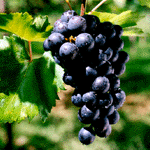
The final choice was a black table grape variety of
French origin called 'Alphonse Lavallé' or 'Alfonso'
among the growers.
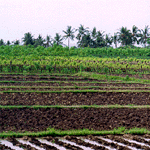
A visit to the coastal plain of North
Bali will take you to vast planted areas where the vines
are all trained into an overhead trellis called Pergola
and where the posts consist of small trees, which have
to be pruned as well. Besides keeping the workers cool,
this system reduces the risk of diseases and sunburn
on the grapes, all contributing to a better fruit quality.
The daily task of seeing the grapes protected from the
elements is a full time operation and workers often
live in houses built amongst the pergolas to take constant
care in case of rain. The crops have a surprisingly
high quality and the grapes brought to the winery are
certainly ranked as the best of the best. It is important
to note that the tropical climate makes for the unique
character of the winemaking in Bali: grapes are constantly
harvested from evergreen vines and wine can be produced
all year long instead of once a year.
After being harvested, the grapes are
transported to the winery where they are gently pressed
to extract their pink juice. Fermentation takes place
in temperature controlled stainless steel tanks with
the help of selected Champagne yeasts. Fermenting temperatures
are kept low in order to preserve the delicate fruity
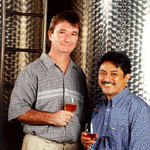
aroma of the grapes. The magic of the artist winemaker,
Vincent Desplat, then comes into play and the product
of his tests and tasting is ready for bottling in due
time.
Click on the images for closer look ...
|